Schlumberger
Scalable design language system for a growing ecosystem of software applications.
Deliverables
Stakeholder workshops, Heuristic evaluations, IA maps, Wireframes, Design principles, Design guidelines, Component library, Functional code
The Challenge
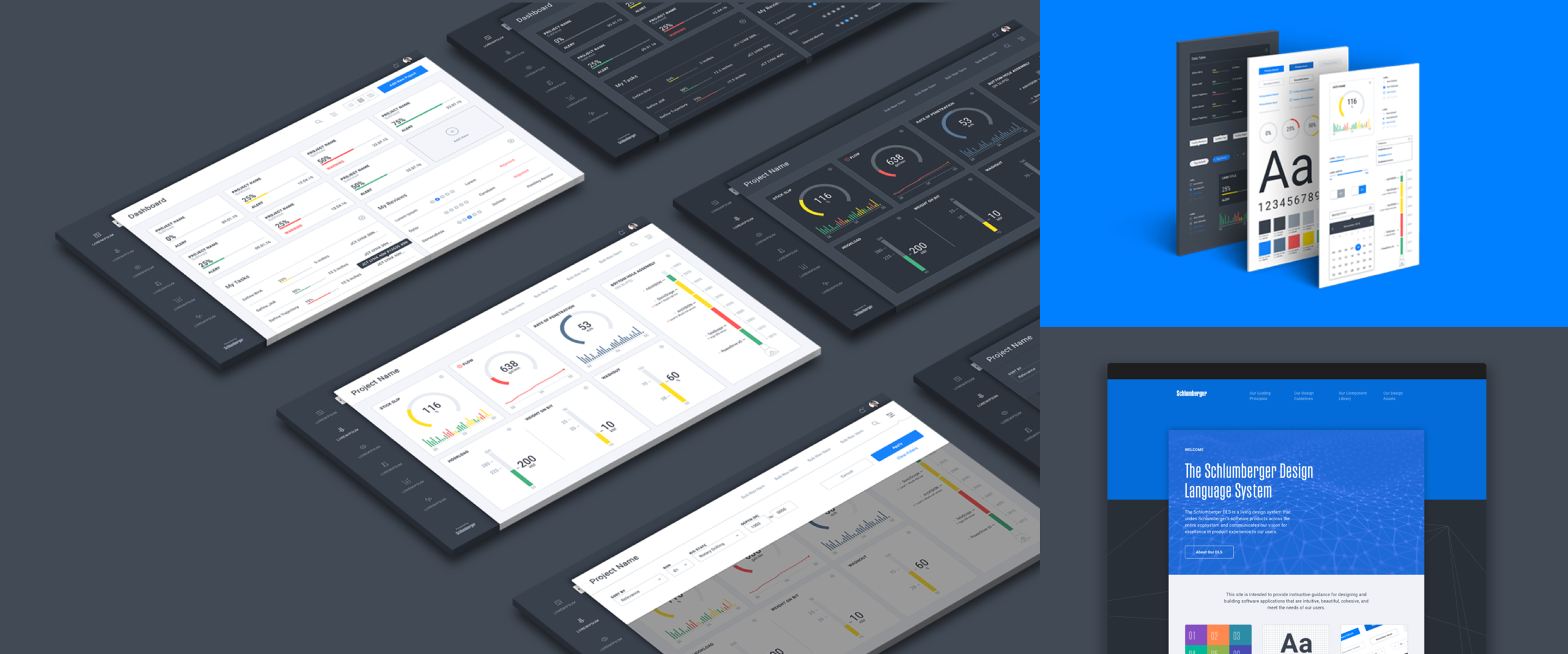
Known for being a global leader in oilfield services, Schlumberger is also one of the largest software acquisition companies providing technological advances to reservoir characterization, drilling, production, and processing. As part of their design transformation, Schlumberger sought to establish consistency in design and brand expression across multiple strategic applications for a growing product ecosystem.
This was achieved by defining commonalities in UX and by delivering a fully functional MVP Design Language System and component library for internal teams to grow and evolve over time.
The Process
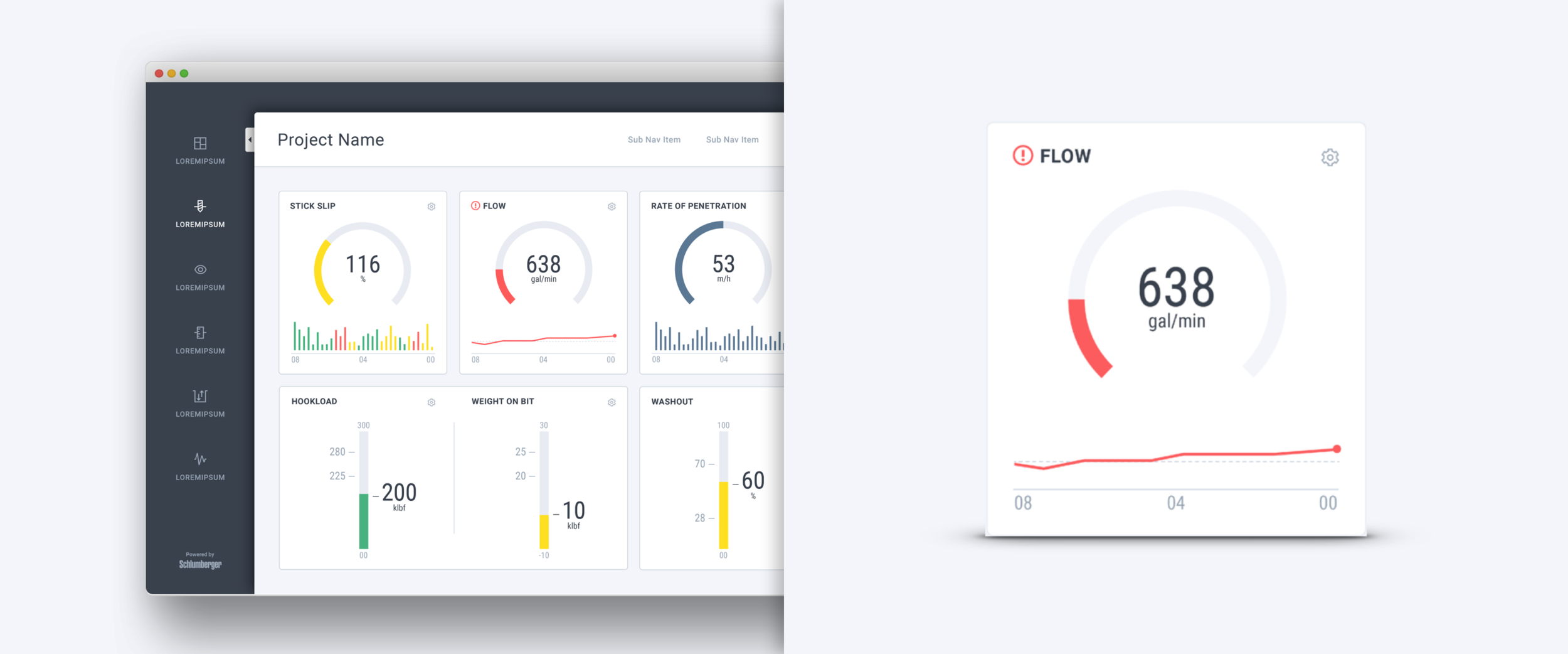
The team successfully managed to navigate a complex landscape of client stakeholders and organizational silos in a continuous effort to bring simplicity, grace, and elegance to the designed solution. Through a series of workshops we engaged key stakeholders in order to better understand business needs, create alignment across organizational goals, and provide transparency into our process.
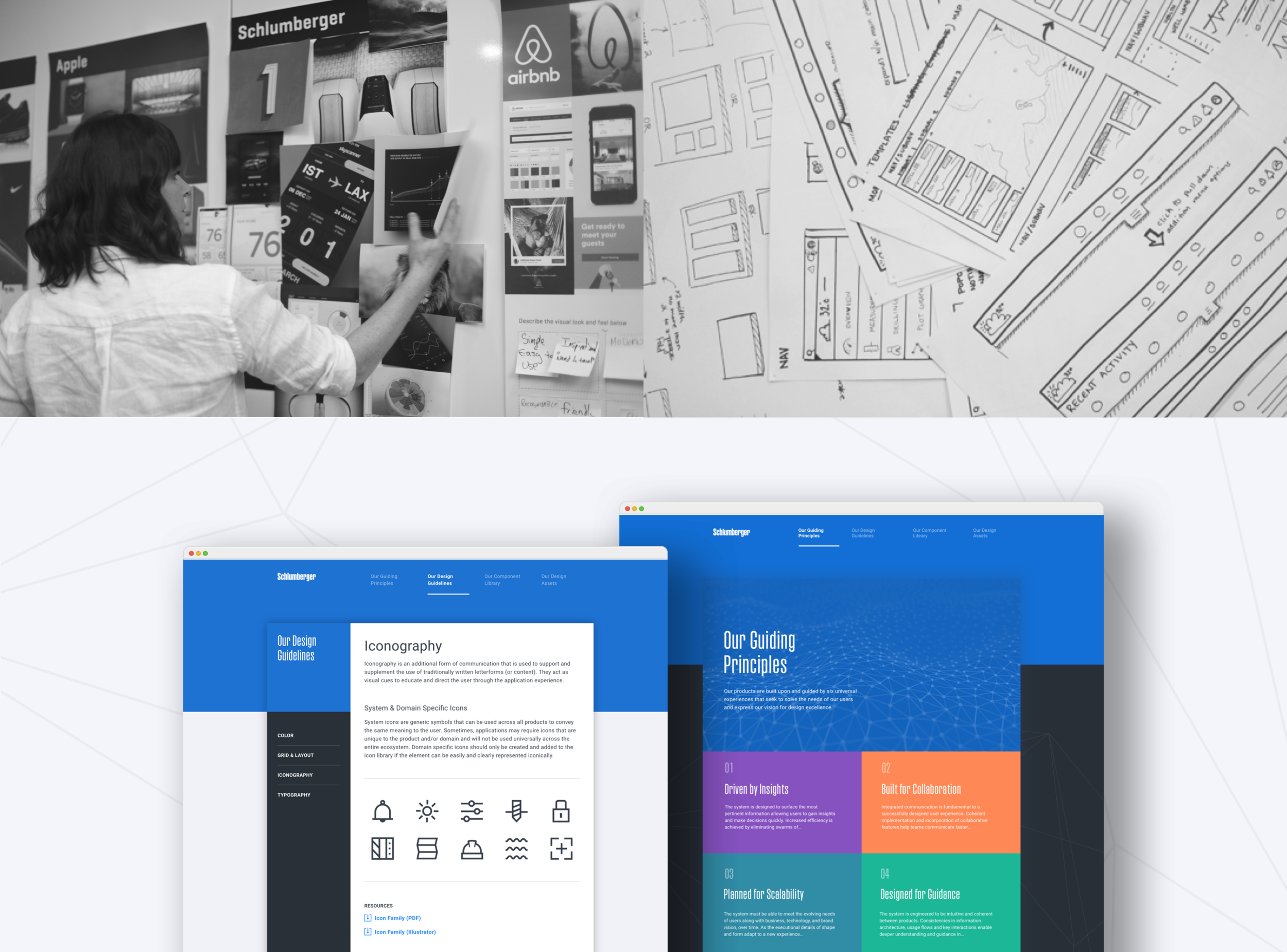
A heuristic evaluation of the current products lead the team to extrapolate a defined set of UX patterns and user needs across the entire product ecosystem that ultimately simplified our stakeholders' perception of the complexities and uniqueness of each software application. As a result, a unique and ownable nagivation paradigm was created as a hero component of the DLS in the hopes that it would become a recognizable interaction paradigm that would define and shape Schlumberger's software experience.
Both experience principles and design guidelines were created and included in the DLS to act as a unifier for all current and future design workstreams.
Delivery & Results
In 15 weeks, the team successfully delivered a fully functioning DLS and component library that bridged the needs of both technology and design teams and enabled Schlumberger to continue to grow and evolve the design language over time. The DLS itself was built from the same codebase with common assets and components as a testament to the scalability of the design language system across a product ecosystem.
It includes:
More than 40 components, including four signature templates; experience principles and robust design guidelines; evergreen content to be used for socializing, training/onboarding, and governance; rich metadata infrastructure for component and template tagging and design-to-development workflows

Throughout the engagement we collaborated with Schlumberger designers and technologists in an effort to empower them to own, evolve, and grow the DLS into the future. The success of this effort was predicated on a careful handoff as well as the delivery of a socialization and governance model that would ensure it's widespread adoption. As part of our final presentation, we orchestrated and facilitated an in-depth Q&A session between the core design team and SLB stakeholders.